On a white background, Stellar Orthodontics in San Marcos, CA features a gradient design of gray four-pointed stars in various sizes.

Palatal Expander in San Marcos CA

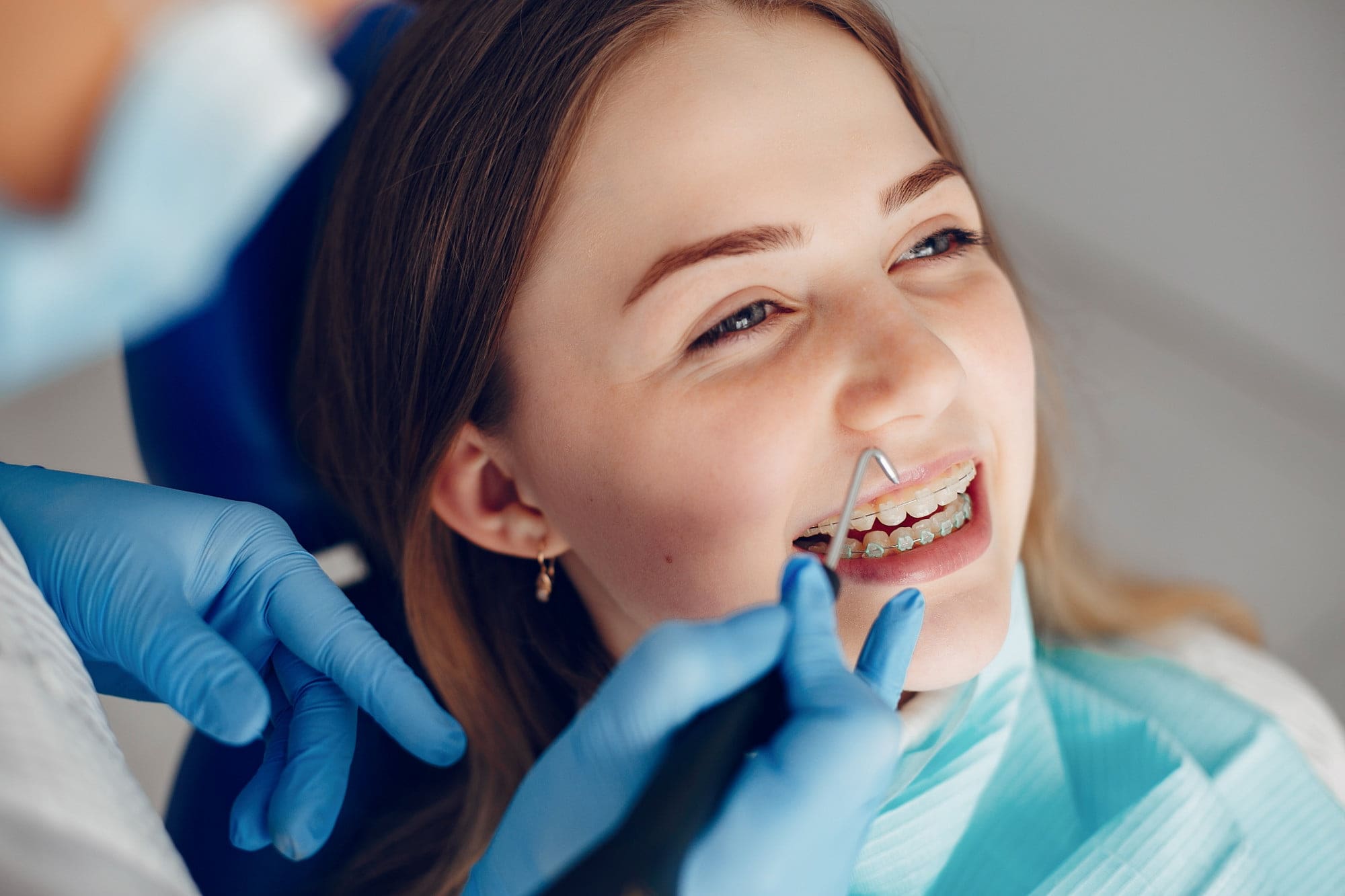
A woman undergoing a dental examination by a dentist in San Marcos CA, focusing on her teeth and palatal expander

What is a Palatal Expander?

At Stellar Orthodontics in San Marcos, Dr. Laura provides custom palatal expanders to gently widen the upper jaw. Also called a rapid palatal expander (RPE), this appliance applies light, consistent pressure to create space for crowded teeth, correct crossbites, improve bite function, and may support better nasal airflow in appropriate patients.

Types and Mechanism of Palatal Expanders

We match expander design to your age, anatomy, and goals for predictable results.

Rapid Palatal Expander (RPE)

Ideal for growing children and younger teens; a small center screw is turned on a set schedule to produce precise, gradual widening while anchored to molars, and timing matters because it’s most effective before the mid‑palatal suture fuses.

Bone-Borne Expanders

Best for older teens, adults, and complex cases; miniscrews anchor directly to bone to drive more true skeletal change with less tooth tipping when traditional tooth‑borne options are limited.

Miniscrew-Assisted RPE (MARPE)

Designed for older teens and adults seeking more skeletal expansion; combines an expander body with mini‑implants to direct forces to the palate for greater orthopedic change and minimal unwanted dental movement.

Mandibular (Lower) Expander — Dental Arch Expansion Only

The lower jaw does not split at the midline, so a mandibular expander is used to widen the dental arch (teeth positions) rather than the jawbone. It gently uprights and broadens lower teeth within healthy limits to create space, coordinate with the upper arch, and reduce rotations—it does not widen the lower jawbone itself.

  • Common options: Lower Schwarz appliance, lip bumper (reduces lip pressure to allow natural widening), and fixed lower arch‑development devices that help upright posterior teeth.

The Process of Impression or Scan and Placement of Separators

Modern digital tools make treatment comfortable, accurate, and efficient.

Impression and Digital Scan

We use advanced digital scanning instead of traditional putty impressions to capture an accurate 3D model for a precise, comfortable custom appliance.

Placement of Spacers or Separators

If bands are needed, tiny elastomeric separators are placed for a few days to create space between teeth. Some appliances, especially bone‑borne, may not require separators.

Advantages of 3D Printed Appliances and Digital Scans

Digital scans and 3D printing improve fit and comfort, reduce chairside adjustments, create smoother edges, and speed delivery for a seamless experience.

Digital Workflow in Palatal Expander Fabrication

Our fully digital workflow allows us to design, simulate, and fabricate your expander with high precision so activation, tracking, and outcomes are predictable and personalized.

Effectiveness and Outcomes

Treatment for maxillary deficiency is well documented, with the greatest skeletal change during growth. Expansion improves dental alignment, corrects crossbites, and may enhance nasal breathing by increasing airway volume in appropriate candidates; adult options like MARPE or bone‑borne expanders can also be effective with careful diagnosis.

Palate Expanders, Airway Improvement, Snoring, and Sleep Apnea

Upper jaw expansion can increase nasal airflow and may reduce mouth breathing and snoring in select patients; suitability is case‑specific, especially in adults.

Impact on Speech and Comfort

Most patients adapt within days. Temporary lisping, extra saliva, or mild pressure after activations is common and typically manageable with over‑the‑counter pain relievers.

Impact on Sleep Apnea and Snoring

Obstructive Sleep Apnea involves airway narrowing during sleep; by widening the upper jaw and nasal cavity, certain patients may experience reduced symptoms when evaluation supports this approach.

Clinical Evidence

Research supports skeletal expansion in growing patients and shows that selected adult protocols (e.g., MARPE) can produce meaningful orthopedic and airway effects; individual outcomes vary.

Early Orthodontic Intervention

Early evaluation lets us leverage growth for efficient skeletal change, create space for permanent teeth, address crossbites, and potentially support healthier breathing patterns long term.

Importance of Comprehensive Diagnosis

Thorough records, including digital scans, photos, X-rays, and, when appropriate, 3D imaging, help us assess teeth, jaws, gums, and airway to choose the right appliance, activation schedule, and timing for stable results.

Conclusion

At Stellar Orthodontics in San Marcos, Dr. Laura and our team combine advanced digital technology with personalized planning to deliver effective upper palatal expansion and lower dental arch expansion. From comfortable scans and 3D‑printed appliances to clear instructions and ongoing support, we’re committed to healthy, beautiful, and stable smiles. Ready to begin? Schedule your free orthodontic consultation today.

FAQ

How long does it take to see results with a palatal expander?

Many patients notice changes within weeks. Active expansion typically takes a few weeks to a couple of months, followed by a holding phase; total appliance time commonly runs 3-6 months including stabilization.

Will wearing an expander be painful?

Expect mild pressure or soreness after placement or turns that usually eases within a day or two; over‑the‑counter pain relievers typically help, and our team provides detailed care tips.

Do mandibular expanders widen the jawbone?

No. Lower expanders only widen the dental arch by adjusting tooth positions within healthy limits; true skeletal expansion applies to the upper jaw.